


Digital Apron: Panoramic Apron Visibility and Control
Digital Apron or Virtual Ramp gives ramp controllers and airside teams a live, panoramic view of apron activity across multiple apron areas, including where line-of-sight is limited. By creating a shared, real-time operational picture, it improves coordination and supports safer, more consistent ramp decisions across complex apron environments.
Trusted at major international airports including Fort Lauderdale, Hong Kong, Malta, LaGuardia, and Doha
- panoramic apron visibility
- virtual ramp control
- beyond line-of-sight
- built on chorus
- augmented video overlays
- Centralized or remote
- event review & playback
The Apron Visibility Challenge
On a busy apron, no one sees the whole picture.
Airports are handling more aircraft and tighter turnaround schedules on the same footprint. Managing the apron with a mix of line-of-sight, CCTV, radio, and coordination across multiple teams is structurally limited and cannot scale with growing apron complexity and traffic volumes.
Ramp controllers, airside operations, and airport operations centers each see different parts of the operational picture. Decisions get made on partial line-of-sight, fragmented monitoring tools, and manual coordination between teams.
During periods of high traffic or irregular operations, that fragmented view slows decision-making, adds coordination effort, and makes it harder to maintain a consistent understanding of activity across the apron.
How Digital Apron Solves Fragmented Apron Visibility
Digital Apron gives every team one shared, real-time view of the apron.
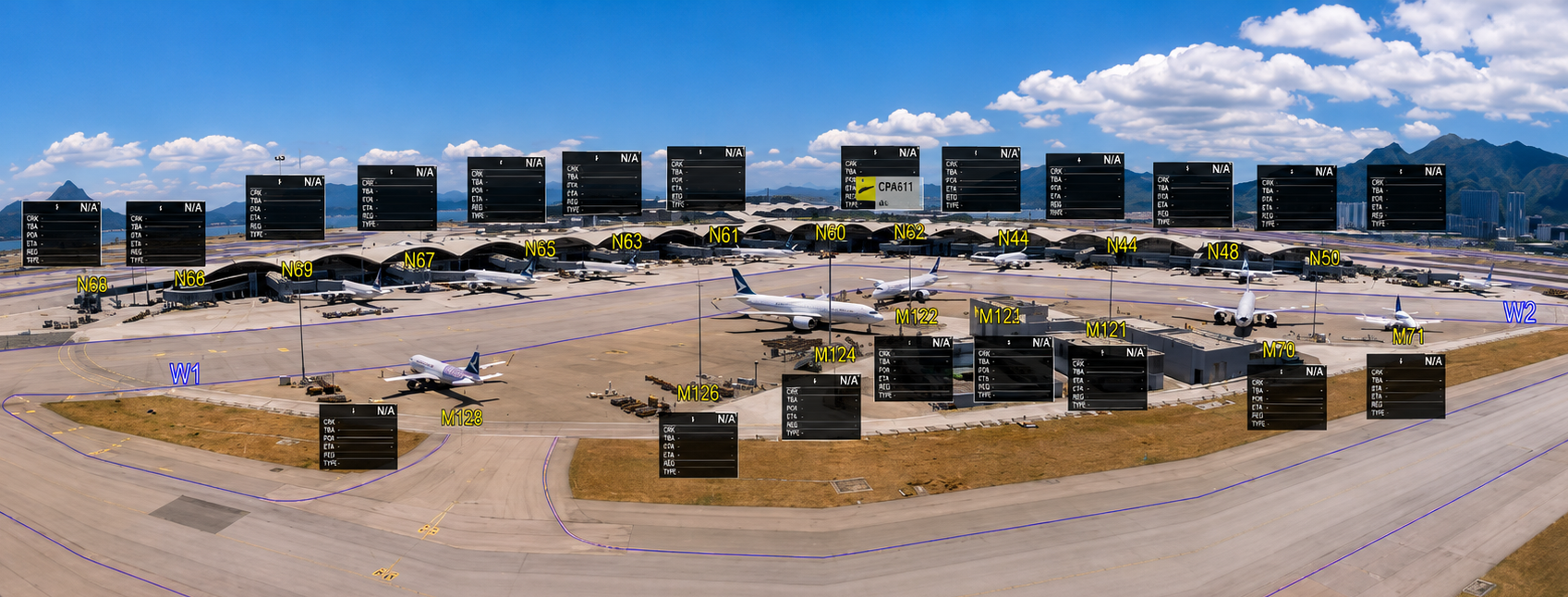
Digital Apron establishes a centralized, real-time panoramic view of apron activity through an augmented video environment.
The solution combines high-resolution panoramic airfield video with contextual operational data, presented across both heads-up (video wall) and heads-down (controller working position) displays. This allows ramp controllers to maintain continuous awareness of apron activity while accessing detailed operational information when needed.
Rather than relying on fragmented visibility or manual coordination between systems and teams, Digital Apron enables controllers to operate within a unified visual monitoring environment.
Digital Apron supports faster awareness, more intuitive decision-making, and improved coordination across ramp operations.
How Digital Apron Works
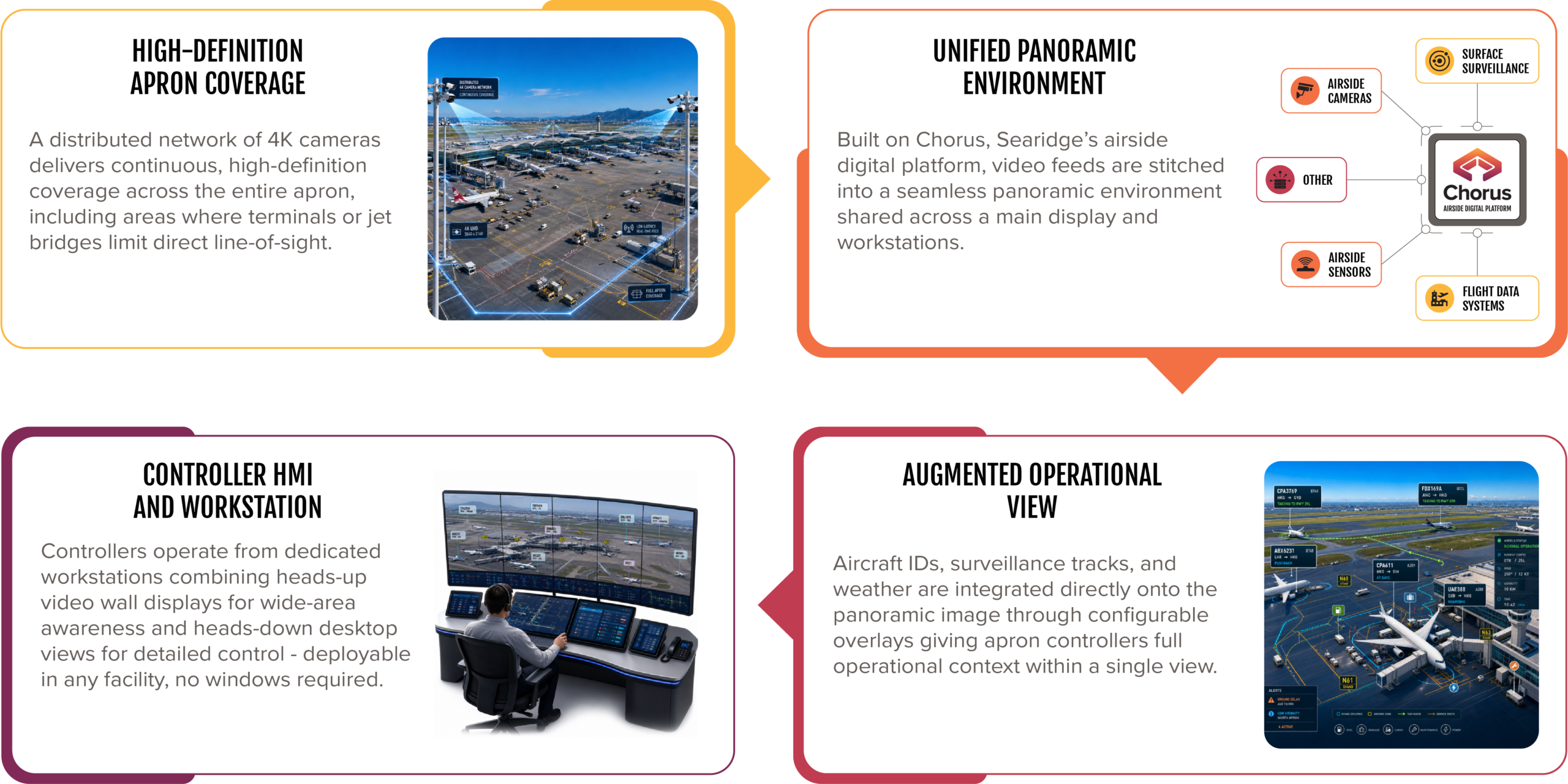
Digital Apron applies Searidge’s proven digital tower technology to apron monitoring and control, turning a network of airfield cameras into a single, shared panoramic operating view enriched with operational data.
Digital Apron Key Capabilities
Panoramic Visibility
Continuous, Wide-Area Apron Visibility
See aircraft movements, stand activity, and ground operations across large apron areas from one, centralized panoramic view. Maintain visibility even in areas where terminals, jet bridges, or other infrastructure limit direct line-of-sight.
augmented view
Live Video with Operational Overlays
Operational data sits directly on the live apron video, so controllers monitor apron activity without switching between disconnected systems.
Multi-view monitoring
Wide-Area Awareness, Detailed When Needed
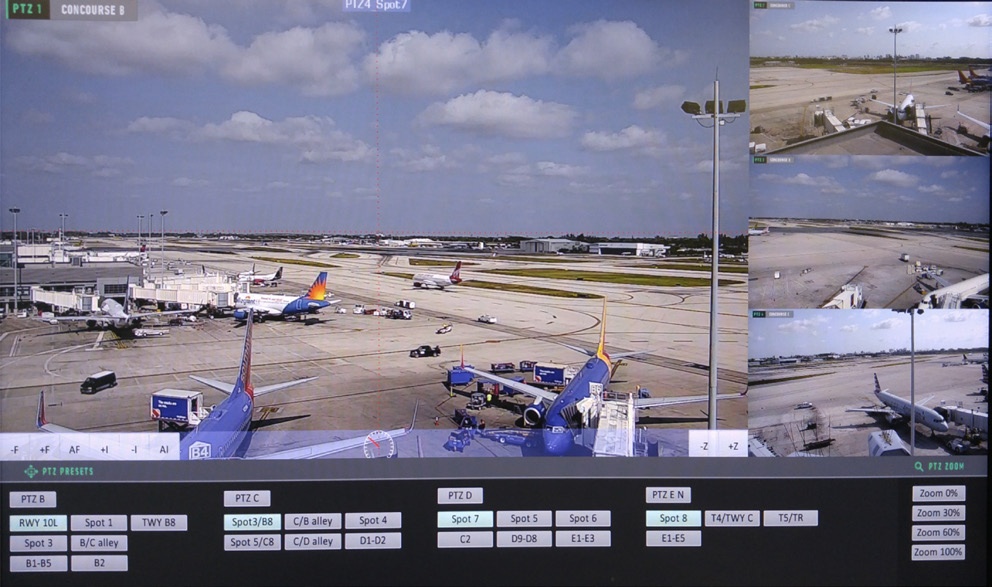
Move between wide-area awareness and close-in detail in a single system. Zoom into a specific stand or situation without losing sight of the wider apron.
Flexible Operations
Centralized and Flexible Ramp Control & Operations
Ramp control no longer depends on direct line-of-sight from a traditional tower. Centralize, relocate, or operate from remote or windowless facilities, for more flexible operating models and stronger operational resilience and continuity.
Shared View
Coordinated Ramp Operations
Ramp controllers, airside operations, and other stakeholders work from one shared operating panoramic view. This reduces reliance on manual coordination and the risk of miscommunication.
review & audit
Event Review and Operational Playback
Revisit recorded apron activity, with synchronized audio where deployed, to support incident review, operational analysis, and defensible event reconstruction.
alerts & ai
AI-Enabled Operational Monitoring
Where enabled, AI-supported vision monitoring flags conditions such as hazard zones, unauthorized vehicle or pedestrian presence, aircraft clearance delays, GSE positioning, and tail or wingtip clearance, providing additional operational context without replacing operator decisions.
Watch Digital Apron in Action
See how a shared, panoramic operating view brings the whole apron into a single picture.
How Digital Apron Benefits Your Operations

Earlier Awareness
Spot developing situations such as stand conflicts, congestion, and ground activity issues earlier, and act before they escalate into delays or disruptions.

Improved Coordination Across Ramp Operations
Working from a shared panoramic operating view reduces reliance on manual coordination and repeated information exchange, enabling faster, more consistent decision-making.

Effective Capacity Use
Continuous, apron-wide visibility supports smoother aircraft flow and more predictable operations during both routine and peak conditions, helping airports increase throughput without requiring additional physical infrastructure.

Operational Resilience
By replacing the traditional out-the-window model with a digital environment, airports can centralize or virtualize apron control independent of direct line-of-sight. This supports backup and contingency environments and enables stronger operational continuity during disruptions, expansion projects, or infrastructure limitations.

Scalable Digital Foundation
Built on the Chorus, Searidge’s airside digital platform, Digital Apron lets airports share operational data and add new digital capabilities across the airside without duplicating integrations or creating operational silos.
Why Digitize Apron Control
The reasons to digitize apron control depend on your airport’s goals and challenges.
Digital Apron by Searidge supports each of these operating models:

Replacement
Your existing apron towers are reaching end of life, and you want to replace them with a central remote tower centre.

Expansion
You want to support airport expansion by remotely controlling a new area of the airport, with no direct line-of-sight, from the main apron tower.

Contingency
You want to add a contingency apron tower as part of your resilience planning.

Hybrid
You want to augment an existing apron tower with digital views, adding coverage of blind spots and improving visibility in low-visibility conditions.

Consolidation
You want to move control of a secondary apron tower into the main apron operation during low-traffic periods, or more permanently.
Digital Apron in Operation
Searidge Digital Apron and Virtual Ramp solutions support centralized
ramp monitoring and operational visibility at major international airports.
Fort Lauderdale–Hollywood International Airport (FLL)
First Virtual Ramp Control System in the U.S.
FLL was the first U.S. airport to implement a Virtual Ramp Control System, managing ramp operations remotely from a single control room.
- Delivered full airfield visibility from a remote location, with no new line-of-sight towers required.
- Combined visual-sensor and AODB data into on-screen video overlays (origin, aircraft type, callsign, arrival gate).
- Supports airfield efficiency and reduces congestion as new runways and taxiways are built.

Result: Safe, effective remote ramp management — a technological alternative to costly new towers.
Hong Kong International Airport
(HKIA)
Digital Apron & Tower Management System
As part of its three-runway expansion, HKIA deployed the Digital Apron and Tower Management System (DATMS) for a unified view of airfield activity.
- Deployed more than 240 ultra-high-resolution cameras with panoramic stitching and real-time overlays.
- Unified aircraft and vehicle movements into one view for controllers and operations teams.
- Strengthened situational awareness and collaborative decision-making across the airfield.
Result: Improved safety and operational efficiency across a major three-runway hub.
Malta Air Traffic Services
Permanent Remote Apron Management
In 2010, Malta Air Traffic Services became one of the first ANSPs to install a permanent remote apron management system.
- Grew from a four-camera, 180-degree view of Apron 9 to 62 cameras across 10 locations.
- Replaced the out-the-window view with panoramic video, eliminating blind spots across aprons, taxiways, and runways.
- Supports faster reaction times, easier incident investigation, and airport growth through total airfield visibility.
Result: A remote apron system in continuous operation since 2010, expanded as the airport has grown.
LaGuardia Airport — Delta Air Lines
Virtual Ramp Control
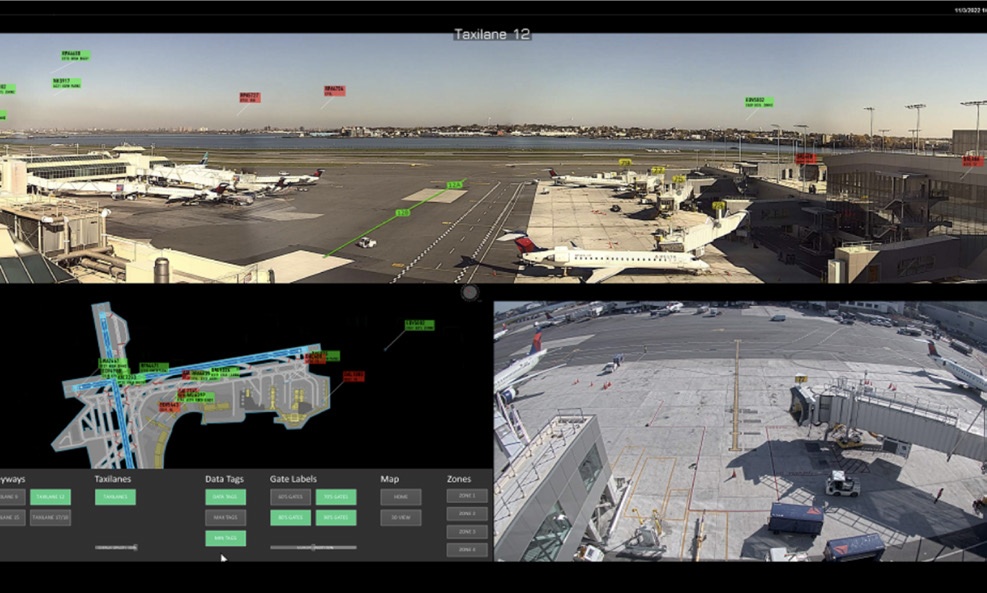
At LaGuardia, Searidge supports virtual ramp control for Delta Air Lines, using stitched panoramic video feeds from distributed camera arrays across the terminal area.
- Monitors apron activity on large video-wall displays with aircraft data tags and operational overlays.
- Maintains visibility across multiple gate areas from a centralized control environment.
- Coordinates aircraft movements and ramp operations from a single location.
Result: Coordinated ramp operations across multiple gate areas from a single centralized environment.
Digital Apron Frequently Asked Questions
A Digital Apron, or Virtual Ramp, is a real-time apron (ramp) visibility and monitoring solution that gives a shared operational view of apron activity through a wide-area video environment. It enables ramp controllers and airside operations teams to monitor and manage apron activity across multiple stands and ramp areas from a single, continuous visual view, maintaining awareness of the overall apron while focusing on specific situations when required. Airports, airlines, and ANSPs use Digital Apron to monitor apron activity in real time across multiple or geographically dispersed apron areas.
A Digital Apron can extend coverage across multiple, geographically dispersed aprons, de-icing pads, and aircraft parking areas. By stitching multiple high-resolution camera views into a single live panoramic image, it gives controllers visibility across large apron environments, including areas where terminals, jet bridges, or other infrastructure limit direct line-of-sight.
Traditional ramp control depends on direct line-of-sight from a tower or ramp position, supplemented by CCTV and radio. A Digital Apron replaces the out-the-window operating model with a centralized, panoramic digital view of apron activity, combined with operational overlays and a map-based view. Rather than relying on physical sightlines and radio calls alone, teams work from a shared, real-time picture of what is happening across the ramp.
A Digital Apron improves situational awareness by bringing live panoramic video, operational data, and configurable alerts into a single operational picture that operational teams share. Controllers maintain continuous wide-area awareness of apron activity while being able to focus on specific situations in detail, all within one monitoring environment.
A Digital Apron supports safety by providing continuous visibility of aircraft and vehicle movements across the apron, including areas with limited line-of-sight, and by helping teams identify developing situations earlier. Configurable operational alerts and, where enabled, AI-supported vision monitoring can help highlight conditions that may present safety-related risks, reducing reliance on manual observation and radio communication alone.
Digital Apron integrates with existing airport systems through Chorus, Searidge’s airside digital platform. Integrations can include the Airport Operational Database (AODB), surveillance and ATC data sources such as radar and ADS-B feeds, and other airside operational systems. Chorus standardizes operational data across these sources, allowing Digital Apron to bring visual, surveillance, and operational context into a single monitoring environment without point-to-point integrations for each system.
Airports implement a Digital Apron or Virtual Ramp for several reasons: replacing ageing apron control facilities with a centralized remote facility, supporting expansion into areas with no line-of-sight, adding a contingency or backup ramp control environment for resilience, enabling hybrid control that augments an existing tower with digital views, and consolidating ramp control positions. In each case, the goal is a more flexible, resilient way to monitor and control apron operations without depending on a direct out-the-window view.
Digital Apron Resources

Case Study
Fort Lauderdale: First Virtual Ramp Control in the U.S.
Read how FLL manages ramp traffic remotely with full airfield visibility, improving safety and efficiency from a single control room.
Case Study
Hong Kong: Digital Apron & Tower Management System
Learn about one of the largest digital platforms for tower and apron management, a first of-its-kind collaboration between an ANSP and airport.
Case Study
Malta: Permanent Remote Apron Management
Read how Malta improved visibility, expanded coverage, and strengthened controller communication with a permanent remote apron management system.

Data Sheet
Digital Apron Data Sheet
Download and read our product data sheet to learn more about Digital Apron.

Article
Digital Apron Management
Learn how our customers are using Digital Apron and our vision for this technology.

Event
2026 ACI-NA Annual Conference
Come visit us at booth 930. Let’s talk about your challenges and how to best solve them.
Are you ready to modernize apron and ramp management?
Give your controllers and airside teams one shared, real-time view of the apron, so they can spot developing situations earlier and coordinate with confidence.
Move from partial sightlines and radio coordination to one panoramic operating picture of the ramp.